
Invasive Plant Species - Lake Erie Farmlands
Canada Thistle is a highly invasive, noxious weed found in all 88 counties, spreading, via aggressive, deep, creeping roots and wind-blown seeds. Identification & Characteristics •Appearance: Erect stems (2–4 ft tall) that are grooved, branched, and lack spines, unlike other thistles. •Leaves: Dark green, spiny, and wavy, with a lighter, sometimes hairy underside. •Flowers: Small (0.5–1 inch), purple-pink or lavender flower heads that bloom in June. •Roots: Extensive, deep, and fragile rhizomes that can produce new plants from tiny fragments. Impact in Ohio •Invasive: It is considered a noxious weed that displaces native plants and reduces agricultural crop and forage yields. •Persistent: Seeds can remain viable in the soil for up to 20 years, and roots can spread 15+ feet, allowing it to dominate areas. Management Tips •Timing: The best time to treat is early June (after budding, before flowering) or during fall regrowth (September–October). •Systemic Herbicide: Applications of herbicides such as glyphosate, clopyralid, or aminopyralid are most effective in late summer/early fall. •Mechanical Control: While mowing or cutting can weaken plants, it is often ineffective alone because of the extensive root system, according to cleveland.com. •Smothering: Using tarps or cardboard can help eliminate patches in gardens, per cleveland.com.

Palmer Amaranth and Waterhemp are aggressive, smooth-stemmed herbicide-resistant "pigweeds" challenging Ohio agriculture, with water hemp being more widespread and Palmer amaranth being more acutely aggressive. Key Differences for Identification •Petioles (Leaf Stalks): In Palmer amaranth, the petiole is often longer than the leaf blade itself. Waterhemp has shorter petioles. •Leaf Shape: Palmer leaves are broader, often with a diamond or poinsettia-like shape. Waterhemp leaves are lance-shaped, narrow, and often appear glossy or waxy. •Flowering Structure: Female Palmer plants have stiff, sharp, and painful-to-the-touch bracts, with seedheads 1–2 feet long. Waterhemp seedheads are more slender and rarely over 6 inches. •Growth Habit: Palmer amaranth generally grows faster and has a more geometric, rosette pattern in its early stages. Ohio Context •Distribution: Waterhemp is considered ubiquitous (widespread) in many parts of Ohio, while Palmer amaranth is less common but expanding, usually introduced via contaminated equipment or seed. •Management: Both require a strict combination of pre- and post-emergence herbicides, as they have developed widespread resistance, necessitating rapid identification to avoid catastrophic yield losses. •Similarities: Both species are dioecious (separate male/female plants), do not have hairs on stems, and can produce over 1 million seeds per plant.
Quackgrass is a common, aggressive perennial weed in Ohio, often found in lawns, gardens, and farm fields. It is identified by its bright green color, fast growth, and spreading by sharp, while, underground rhizomes. Identification and Behavior •Appearance: Light green color, often growing faster than surrounding turf. •Roots: Spreads via aggressive, sharp-tipped white rhizomes that can reach 4–8 inches deep. •Key Feature: Clasping auricles (small claw-like appendages) at the base of the leaf blade where it meets the stem. •Habit: Forms dense patches that crowd out desirable turfgrass and garden plants. Control and Removal Strategies in Ohio •Non-Selective Herbicides: Products containing glyphosate (e.g., Roundup) are most effective. Because these kill all plants they contact, carefully paint or spot-treat the quackgrass leaves. •Manual Removal: Tilling or digging often propagates the plant by breaking rhizomes. If pulling, you must remove the entire root system, which is best done when soil is loose. •Smothering: Covering infested areas with black plastic or tar paper for a full season can kill the plants. •Preventive Care: A thick, healthy, well-fertilized lawn (mowed at 2.5–3 inches) is the best defense against infestation.
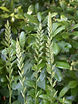
Multiflora Rose is a thorny shrub with arching stems. The compound leaves are divided into 5-11 sharplytoothed leaflets. Key Differences for Identification •Petioles (Leaf Stalks): In Palmer amaranth, the petiole is often longer than the leaf blade itself. Waterhemp has shorter petioles. •Leaf Shape: Palmer leaves are broader, often with a diamond or poinsettia-like shape. Waterhemp leaves are lance-shaped, narrow, and often appear glossy or waxy. •Flowering Structure: Female Palmer plants have stiff, sharp, and painful-to-the-touch bracts, with seedheads 1–2 feet long. Waterhemp seedheads are more slender and rarely over 6 inches. •Growth Habit: Palmer amaranth generally grows faster and has a more geometric, rosette pattern in its early stages. Ohio Context •Distribution: Waterhemp is considered ubiquitous (widespread) in many parts of Ohio, while Palmer amaranth is less common but expanding, usually introduced via contaminated equipment or seed. •Management: Both require a strict combination of pre- and post-emergence herbicides, as they have developed widespread resistance, necessitating rapid identification to avoid catastrophic yield losses. •Similarities: Both species are dioecious (separate male/female plants), do not have hairs on stems, and can produce over 1 million seeds per plant.

Resources to learn more about the impact of Invasive Plants for Farmlands - OHIO
Ohio Department of Natural Resources
ODNR (Ohio Department of Natural Resources

Tree-of-Heaven is a highly invasive, fast-growing tree widespread across Ohio, often dominating disturbed urban and woodland sites. Identification & Impact: •Appearance: Grows up to 80 feet tall with long, compound leaves (1–4 feet). •Odor: Crushed leaves or broken twigs produce a strong, unpleasant smell, often described as burnt peanut butter or rotten cantaloupe. •Bark: Smooth and grey, resembling the skin of a cantaloupe or "wormy" markings as it ages. •Invasiveness: Spreads rapidly through both prolific seeds and a complex root system, producing dense thickets that displace native plants. •Spotted Lanternfly Host: Serves as the primary host for the destructive Spotted Lanternfly (Lycorma delicatula). Management & Removal: •Do Not Just Cut: Cutting the tree without herbicide treatment causes it to resprout aggressively from the roots. •Method: The "hack-and-squirt" method using herbicides containing glyphosate or triclopyr is most effective. •Timing: The best time for control is generally late summer to mid-fall. •Assistance: For identification or control guidance, contact the Ohio Department of Natural Resources or OSU Extension.

Poison Hemlock is a highly toxic, invasive biennial plant now found in 88 Ohio counties, commonly growing 4-8ft. tall along roadsides, ditches, and disturbed areas. It features white, umbrella-shaped flower clusters and hess, pairlurple-spotted stems. All parts are deadly if ingested. Key Facts and Safety: •Identification: Fern-like, finely divided leaves and purple-spotted, hairless stems. •Habitat: Thrives in full sun to partial shade, roadsides, fencerows, and waste areas. •Danger: Contains deadly alkaloids. While it typically does not cause a rash, touching it can transfer toxins, and mowing it can release dangerous airborne particles, as reported in this YouTube video. •Management: The best time for control is late winter to early spring when it is in the young rosette stage, according to The Ohio State University. •Handling: Wear gloves and protective clothing when removing; wash thoroughly after contact. Symptoms of Poisoning: Ingestion causes symptoms such as rapid heartbeat, muscle twitching, tremors, seizures, and respiratory failure. Seek immediate medical attention if ingestion is suspected.
Field Bindweed is a persistent, noxious perennial vine found through most of Ohio, commonly in gardens, fields, and landscapes. Identified by arrow-shaped leaves and funnel-shaped white-to-pink flowers. Identification & Characteristics •Leaves: Alternate, 1-2 inches long, arrow-shaped (sagittate) with pointed or rounded lobes at the base. •Flowers: Funnel-shaped, 0.75-1 inch across, white to pinkish, flowering mid-summer. •Vines: Slender, trailing, or climbing up to 7 feet or more. •Roots: Extensive system of taproots and rhizomes; can regenerate from small root pieces. Management and Control in Ohio Because of its deep root system, manual pulling often fails unless done consistently over several years. •Mechanical: Tilling or pulling can help, but you must remove the entire root, as small pieces re-sprout. •Cultural: Planting thick, competitive turfgrass or using mulch (or cardboard smothering) can weaken plants. •Chemical: Systemic herbicides are most effective. According to Ohio State University Extension and local guidance, the best options include: o2,4-D amine: Good for lawns (selective). oGlyphosate (Round-up): Effective but non-selective (will kill grass/plants it touches). oTiming: Late summer/early fall is the most effective time for herbicide application when the plant is moving nutrients to the roots.
•Common Teasel (D. fullonum): Pink or purple flowers with stiff, upward-curving bracts underneath; leaves are undivided. •Cut-leaved Teasel (D. laciniatus): White flowers with spiny bracts; leaves are deeply lobed (cut-leaved). Common/Cut-leaved Teasel are highly invasive, non-native biennial plants found throughout Ohio, particularly along roadside, in prairies, and disturbed moist soils. Impact in Ohio: •Invasiveness: They are considered some of the most aggressive invasive species in Ohio's natural areas, reducing native plant diversity and forming dense stands. •Seed Production: A single plant can produce 2,000 to over 3,000 seeds, which can persist in the soil. •Habitat: They thrive in open, sunlit habitats, including prairies, savannas, and roadsides. Management in Ohio: •Removal: For small infestations, root cutting (digging up the taproot) is effective. •Mowing: Mowing just before flowering can reduce seed spread but must be repeated, as plants can re-sprout. •Best Time: Cutting is most effective in late spring before seed heads fully develop. •Disposal: The dried flower heads are persistent and can spread seeds even after being cut, so they should be removed and disposed of securely.

Precision Agriculture Services
1. Precision Drone Spraying (Herbicide & Fungicide)
Don’t wait for the ground to dry, our heavy-lift drones get the job done fast.
-
Superior Canopy Penetration: Powerful rotor downwash pushes sprays deep into the crop canopy for full 360° coverage.
-
Targeted Herbicide Application: Spot-treat resistant weeds or invasive species in pastures and row crops without wasting product.
-
Late-Season Fungicide: Protect your corn or specialty crops when tall growth makes ground rigs and planes impractical.
2. Granular Spreading (Fertilizer & Cover Crops)
Boost soil health and get the most out of every seed and fertilizer bag.
-
Cover Cropping Made Easy: Seed cereal rye or clover into standing corn or beans without knocking over a single stalk.
-
Variable-Rate Fertilizing: Apply granular nutrients exactly where your fields need them most, based on your data, for smarter input use.
3. The Closed-Loop Advantage: Mapping to Application
We don’t just fly drones-we deliver actionable insights.
-
Multispectral Imaging: See stressed areas in your fields before they show up to the naked eye.
-
Prescription Maps: We turn your field data into flight paths that apply product (drone spraying, done seeding, drone fertilizing, and drone inspections) only where it’s needed-saving you money, reducing waste, and protecting the environment.


Join our email list and get access to specials deals exclusive to our subscribers.